
- Hormones released during stress boost performance on cognitive tasks and memory
- The narrowing of perspective we get from flight or flight responses keeps us alert and improves processing speed
- Stress can fuel the underlying biological processes implicated in physical recovery and immunity. Research at Stanford has indicated that stress before knee surgery actually helped patients heal significantly faster.
- Stress and adversity can, in some cases, foster mental toughness, deepen social bonds with others, strengthen life priorities and build a sense of purpose and meaning… post traumatic growth
Category: health and fitness
Good Stressors on one’s Mental health
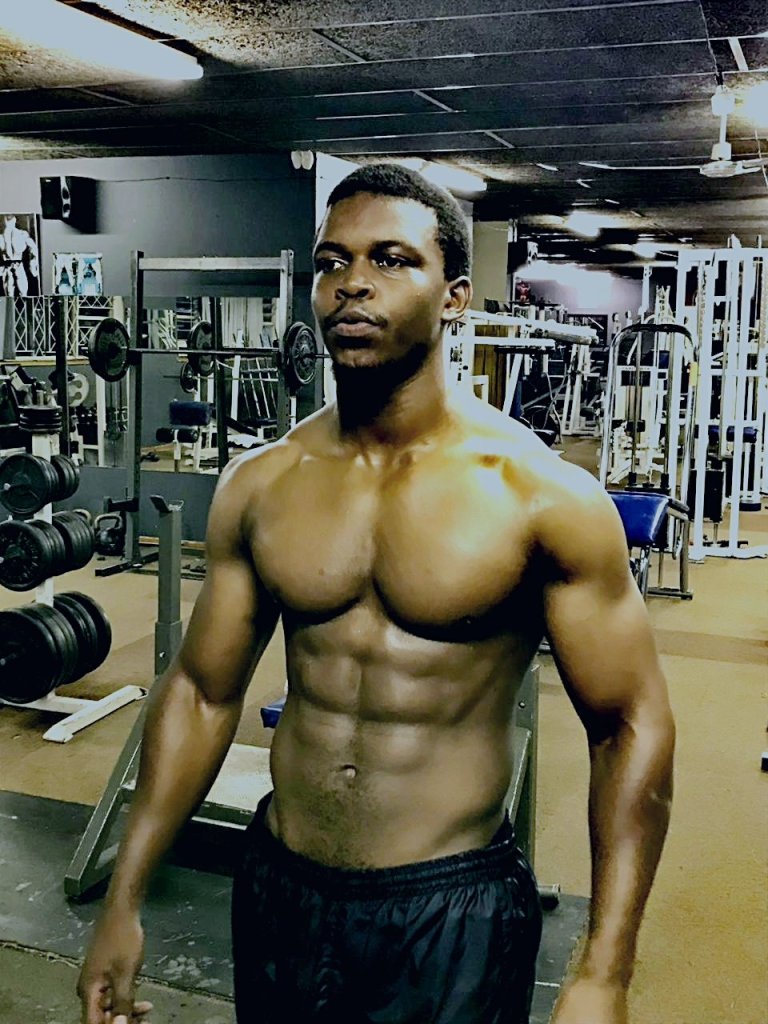
You need a little stress in your life… Without that we drift into nothingness and we get lost with no dreams or ambition… Work to have good stressors in your life
Made in Klerksdorp…
“Everybody wants to be a bodybuilder but nobody wants to lift no heavy a$$ weights… It’s what takes to be #1”
– Ronnie Coleman
Try to download it to watch it
Transformations…
There is a season for everything… Whether good or bad we must go through it… Our bad times help shape us and mould us into a stronger better person… And our good times help us remember how to enjoy life
My life in fitness
Our ability to create comes from our own mental ability to see or virtualize our own desired goals and manifest them into existence
I think you’ll have to download this one to watch it
Contact sports and the brain
Evidence of the dangers of contact sport is mounting, and now Canadian researchers report that playing sports like football or ice hockey can alter the structure and function of the brain.
Brain scans showed that these changes were particularly pronounced in sports that have the greatest risk of body contact.
“There is growing concern about the risk of collisions in sport. However, most of the research has focused on retired professional athletes with decades of exposure to head impacts,” said lead researcher Nathan Churchill. He’s a post-doctoral fellow in the neuroscience research program at St. Michael’s Hospital in Toronto.
“Far less is known about the consequences of repeated body-to-body contact for young, active athletes,” he said.
Churchill and his colleagues scanned the brains of 65 varsity athletes before the playing season began.
“None of the participants had a recent concussion or any major health issues,” Churchill said.
Among the young men and women in the study, 23 played collision sports, such as football and ice hockey, involving routine body-to-body contact.
Twenty-two played contact sports where contact is allowed but isn’t a necessary part of the game, such as basketball, soccer and field hockey. Twenty played non-contact sports, such as volleyball.
The brain scans showed that people who played collision and contact sports had differences in brain structure and function compared to people who took part in non-contact sports.
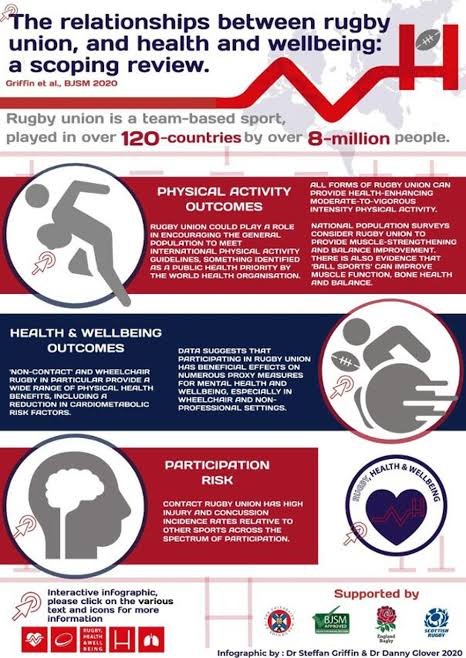
Preparing for a game
Routines can help get you into the right mindset for rugby. Following a routine takes the guesswork out of pre-game preparation and gives you confidence. If your pre-game routine resulted in success last time, it’s only reasonable to expect the same outcome this time.
- Arrive at the venue with plenty of time to spare
- Put on your playing gear
- Tape up
- Warm up
- Hydrate
- Practice your kicks, passing, lineouts, etc.
- Listen to the pre-game team talk
- Warm up again
Routines are not limited to playing rugby; they can also be useful in the gym too. Use the same setup and pre-lift routine for your gym-based exercise, especially big lifts like squats, deadlifts, bench presses, and cleans. Use the same pre-lift routine for all your sets – both warm-up and work sets.

Off season training
The off season is the best time to focus on building strength as the stress of collisions and running in games and training is removed.
3 to 5 exercises for 3 to 5 sets of 3 to 5 reps, for example:
Session 1:
Squat – 3 sets of 5
Bench Press – 3 sets of 5
Deadlift – 3 sets of 3
Session 2:Powerclean – 5 sets of 3
Squat – 3 sets of 5
Push Press – 3 sets of 3
Weighted Chin ups – 3 sets of 5
Exercises used should be compound movements (involving more than one joint e.g. hip, knee and ankle in a squat) using free weights. Add enough weight that the last rep of the last set is a struggle but does not ruin your form. If you train 2 or 3 times in one week you will be able to cover each of the 6 movement patterns.

Coming back with a bang


Excessive fatigue and lack of strength, conditioning, concentration and control exposes one to severe injury in a contact sport such as rugby union. Strong muscles provide stronger, more stable joints, reduce the risk of injury and can tolerate more bumps and bruises.
This is especially important when it comes to the neck or cervical spine. Over the years, players have become fitter, bigger, stronger and faster, and if you are under-developed and not appropriately conditioned, you are at severe risk of getting injured.
Mental health in the NFL
Brandon Marshall has become one of the NFL’s pioneers as it relates to shattering the stigma regarding mental health. The next step for him will include hosting a new show that addresses the issue of mental health in sports. Jada Pinkett Smith’s Red Table Talk Productions is developing The Toughest Opponent, a talk show that will be hosted by Marshall. “A decade ago, I spoke publicly for the first time about my borderline personality disorder diagnosis,” Marshall said earlier this month, via Deadline.com. “Now, I am sharing the mic. I have vowed to make it my life’s purpose to remove the stigma of mental health in sports. I cannot be more excited to partner with Red Table Talk Productions to amplify the powerful truths of my fellow athletes. Mental health is part of the human condition, and athletes shouldn’t be expected to check their humanity at the door. The Toughest Opponent is a place where they will never have to.” More and more athletes have embraced the issue of mental health. Most understand that the people who play the games we watch are human beings, who deal with the same problems that the rest of us encounter. The higher profile and the pressure and the scrutiny and the warped reality of social media only makes it harder. Marshall is at the forefront of those trying to make it a little easier.

 A Mental game to Health and Fitness
You must be logged in to post a comment.